Beyond the Boom-Bust Cycle: How VIP Players Build Durable Crypto Wealth While the Crowd Gets Wiped Out
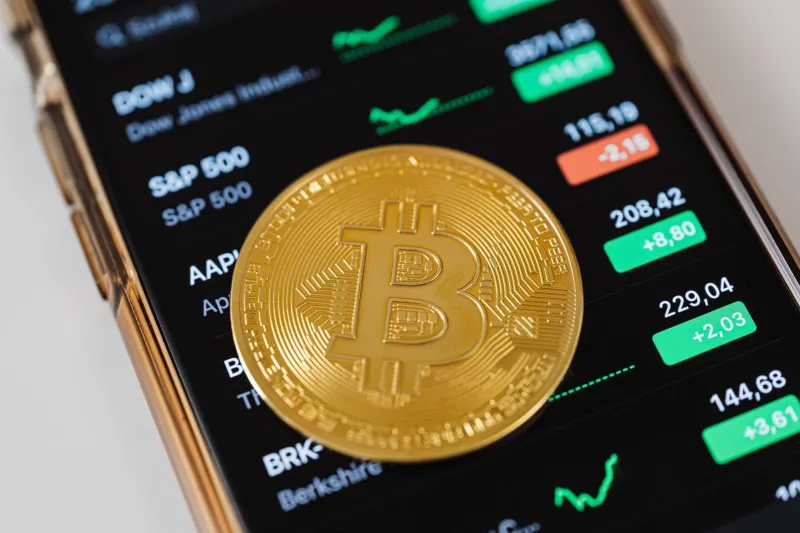
Every bull market produces the same story. Retail traders flood in, leverage up, and ride the wave with complete confidence — right until the moment the wave crashes into them. Liquidations spike. Portfolios that looked like generational wealth on a Tuesday morning are margin calls by Thursday afternoon. And yet, a quieter cohort of players emerges from the wreckage not just intact, but measurably stronger.
These are not lucky survivors. They are architects.
At TurboMoon VIP, the distinction between elite crypto participants and the broader retail crowd is one we observe consistently. The gap is not primarily technical. It is structural, psychological, and — critically — rooted in a set of disciplines that high-performance gamers already understand better than most financial commentators will ever acknowledge.
The Liquidation Trap Is a Mindset Problem First
Before examining what elite players do correctly, it is worth understanding precisely why the majority fail. The boom-bust cycle that devastates casual crypto traders is not a market inevitability — it is a behavioral pattern masquerading as bad luck.
When asset prices climb aggressively, the dopamine feedback loop that drives impulsive decision-making in gaming environments activates with equal force in trading contexts. Casual participants increase position sizes at the worst possible moment, not because the fundamentals justify it, but because rising prices feel like confirmation. They mistake momentum for signal.
The result is a portfolio architecture built on emotion rather than structure — heavy concentration in high-volatility assets, insufficient liquidity reserves, and leverage ratios that leave zero margin for error. When the correction arrives, as corrections invariably do, there is no defensive layer. The entire position unwinds simultaneously.
Elite players recognize this pattern because they have encountered its equivalent at every high-stakes table. The player who doubles down on tilt is not responding to the game. They are responding to their own psychological state. Crypto liquidations are, in many cases, the same phenomenon expressed through a different interface.
Portfolio Architecture as a Competitive Discipline
The framework that separates elite crypto holders from the liquidated majority begins with a concept that experienced VIP players internalize early: position sizing is not a conservative afterthought. It is the primary expression of strategic intelligence.
Top-tier members at platforms like TurboMoon VIP do not approach crypto holdings as a single bet. They construct layered portfolios across multiple blockchain ecosystems — allocating differently based on asset maturity, liquidity depth, and correlation behavior. Bitcoin and Ethereum occupy anchor positions precisely because their liquidity profiles allow for meaningful rebalancing without significant slippage. Emerging layer-two protocols and select altcoins occupy satellite positions, sized to reflect their asymmetric upside without threatening portfolio stability.
This is not a passive strategy. It requires active monitoring of on-chain metrics, liquidity conditions, and cross-asset correlation shifts. Elite players treat this monitoring as they would session review in competitive gaming — systematic, unemotional, and oriented toward long-term performance rather than short-term gratification.
The Multi-Ecosystem Advantage
One of the most consequential distinctions between elite crypto participants and casual traders is the breadth of their blockchain engagement. The retail majority concentrates almost exclusively on the assets they recognize from mainstream headlines. Elite players, by contrast, map the broader ecosystem — identifying yield opportunities, governance participation advantages, and early liquidity positions across chains that the general market has not yet fully priced.
This multi-ecosystem approach mirrors the way serious gamers evaluate platform diversity. Locking yourself into a single environment limits your upside and concentrates your risk. Engaging strategically across multiple platforms — understanding the distinct rules, incentive structures, and community dynamics of each — creates compounding advantages that single-platform participants simply cannot access.
Defi protocols on Solana, liquid staking derivatives on Ethereum, and emerging real-world asset tokenization projects on newer chains each carry distinct risk-reward profiles. Elite players do not chase all of them. They select deliberately, based on a clear understanding of their own risk tolerance and time horizon, and they size each position accordingly.
Psychological Infrastructure: The Invisible Edge
The technical components of elite crypto management are learnable. The psychological infrastructure that makes consistent execution possible is considerably harder to develop — and it is where most serious players ultimately differentiate themselves.
Elite participants maintain what might be described as emotional distance from unrealized gains. A portfolio that has doubled in thirty days is not a license to expand risk. It is, if anything, a prompt to reassess whether current allocations still reflect original strategic intent or whether they have drifted into overexposure through passive appreciation.
This discipline requires a pre-committed decision framework — rules established during periods of calm that govern behavior during periods of volatility. Experienced VIP players set these parameters before entering positions, not in response to market movements. Stop-loss thresholds, rebalancing triggers, and liquidity reserve minimums are defined in advance, removing the most dangerous variable from the equation: real-time emotional judgment.
The parallel to elite gaming is direct. The players who perform most reliably under pressure are not those who improvise brilliantly in the moment. They are those who have done sufficient preparation that the moment of pressure requires execution, not decision-making.
Compounding Across Time: The Wealth Engine Casual Players Miss
Perhaps the most significant structural advantage that elite crypto players hold over the casual majority is their orientation toward compounding rather than exit. The retail instinct is to capture gains at perceived peaks — to convert paper wealth into realized profit before the market reverses. This instinct is understandable. It is also, in most cases, strategically limiting.
Elite players understand that the most powerful wealth-building mechanism in crypto is not price appreciation alone. It is the compounding of yield, governance rewards, and reinvested staking income on top of a base position that itself appreciates over time. When these elements operate in combination across multiple ecosystems, the cumulative effect over a multi-year horizon dwarfs what tactical trading can produce.
This requires patience that the boom-bust crowd structurally cannot sustain. Casual traders need the dopamine of realized gains to maintain engagement. Elite players derive their engagement from the architecture itself — from the satisfaction of watching a well-constructed system perform as designed.
The TurboMoon VIP Standard
At TurboMoon VIP, the members who build the most durable crypto positions share a common characteristic: they treat blockchain asset management as a craft, not a lottery. They invest in understanding the technical infrastructure of the chains they participate in. They maintain relationships with other elite players who surface non-obvious opportunities before they reach mainstream attention. And they apply the same performance standards to their crypto activity that they bring to every other domain of competitive engagement.
The boom-bust cycle will continue to claim the underprepared. That is not a cynical observation — it is simply a description of how markets function when the majority of participants are operating on emotion rather than structure.
For those committed to the elite standard, the cycle is not a threat. It is, periodically, an opportunity.