Focused and Paid: How Elite Players Treat Attention as Their Most Valuable Trading Asset
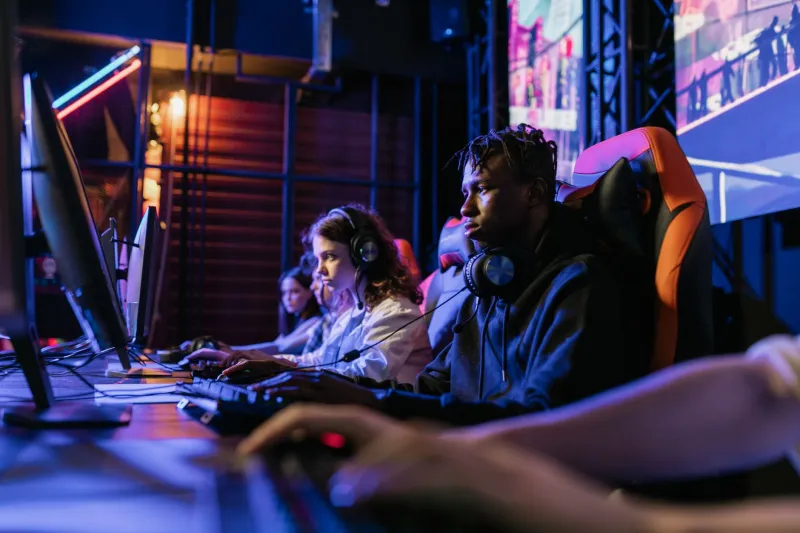
There is a resource more scarce than capital, more perishable than opportunity, and more consistently mismanaged than bankroll. That resource is attention. In the modern gaming and crypto landscape — where platforms compete aggressively for every second of cognitive engagement — the players who have mastered the allocation of their focus are quietly outpacing everyone else. Not because they play harder. Because they play with intention.
At TurboMoon VIP, we have observed a consistent pattern among elite members: their financial performance correlates directly with their ability to control where their attention flows. This is not a soft skill. It is a strategic discipline with measurable consequences.
The Hidden Cost of Scattered Focus
Casual players rarely account for what distraction actually costs them. A price alert notification pulls the eye mid-session. A trending forum thread redirects fifteen minutes of analysis time. A Discord server pings while a position is being evaluated. Each interruption feels minor in isolation. Collectively, they represent an enormous leak in decision quality.
Cognitive science refers to this as "attention residue" — the phenomenon where the mind carries fragments of a previous task into the next one, degrading performance on both. For a player managing live gaming sessions alongside a crypto portfolio, the effect compounds rapidly. Every context switch introduces a margin of error. Enough margins stacked together, and a winning strategy starts producing losing outcomes.
Elite players understand this intuitively. Many have quantified it explicitly. They have tracked their win rates on sessions with external interruptions versus clean, controlled environments — and the data does not lie. Focused sessions produce materially better results. The difference is not marginal. It is structural.
How Top-Tier Players Engineer Their Attention Environment
The first thing elite players do is treat their attention environment the way a professional trader treats their desk setup: with deliberate, non-negotiable architecture.
This means defined session windows — blocks of time with a clear start, a clear end, and zero tolerance for unscheduled intrusions. Phones are silenced or placed in another room. Browser tabs unrelated to the active session are closed. Notifications across all platforms are disabled for the duration. These are not dramatic sacrifices. They are standard operating procedure for anyone serious about performance.
Beyond environmental controls, elite players establish what might be called an attention hierarchy before each session begins. This is a short, explicit ranking of the decisions and observations that matter most during that window. Rather than reacting to whatever surfaces first, they enter each session with a predetermined priority structure. The hierarchy governs where cognitive energy flows — and, critically, what gets ignored entirely.
This pre-session clarity is one of the most underappreciated edges in competitive gaming. The player who knows exactly what they are looking for before they sit down will consistently outperform the player who figures it out as they go.
Decision Frameworks That Protect Cognitive Capital
Attention management is not only about eliminating distraction. It is equally about reducing the number of decisions that require deep cognitive engagement in the first place.
Elite players accomplish this through pre-committed frameworks — rules established outside the heat of a session that govern behavior inside it. Entry criteria, exit thresholds, position sizing parameters, session duration limits: when these are decided in advance and documented clearly, the player does not need to burn valuable attention making them in real time. The framework does the work. The player executes.
This approach mirrors the decision architecture used by professional fund managers and institutional traders. Rules created during calm, analytical conditions are almost always superior to decisions made under the cognitive load of an active session. The discipline required to honor those pre-committed rules — rather than improvising when circumstances feel different — is precisely what separates elite players from the field.
For gaming specifically, this means having clear protocols for when to escalate stakes, when to walk away from a session, and when to reassess a strategy entirely. For crypto holdings tied to gaming activity, it means having defined rebalancing triggers and exit conditions that do not require emotional deliberation in the moment.
Trend Chasing as an Attention Tax
One of the most destructive habits in both gaming and crypto communities is trend chasing — the reflexive redirection of attention toward whatever is generating the most noise at any given moment. A new token surges. A new meta strategy floods the forums. A new platform launches with aggressive promotional incentives. The casual player pivots repeatedly, never building the deep familiarity with any single domain that produces lasting edge.
Elite players recognize trend chasing for what it is: a tax on attention, levied by the market and paid in the form of diluted expertise and inconsistent performance. This does not mean ignoring new developments. It means evaluating them through a disciplined filter rather than reacting to them impulsively.
The filter is straightforward: does this new information materially change my existing strategy, or does it simply feel compelling because it is new? Most trend-driven content fails this test. The player who can make that distinction quickly — and return their attention to their core domain — retains the compounding advantage that comes from depth over breadth.
The Compounding Return on Sustained Focus
Here is the aspect of attention management that most players never reach, because they abandon the practice before experiencing it: focused attention compounds.
The player who spends three months in deep, distraction-free engagement with a specific game type or a specific market segment develops a quality of pattern recognition that cannot be replicated through scattered, high-volume exposure. They begin to see things others miss — not because they have access to different information, but because sustained attention has refined their ability to process the same information more accurately.
In gaming, this manifests as anticipatory reads, superior session timing, and a calibrated intuition about when conditions are favorable. In crypto markets adjacent to gaming ecosystems, it produces an ability to distinguish genuine momentum from manufactured hype — a distinction worth significant capital over time.
At TurboMoon VIP, this is the standard we hold ourselves to and the standard we encourage among our elite membership. The platform exists to reward players who bring their best cognitive resources to bear — not those who show up distracted and hope volume compensates for it.
Building Your Attention Protocol
If you are serious about elevating your performance, the starting point is an honest audit. For one week, track every interruption that occurs during your gaming or portfolio management sessions. Note the source, the duration, and your subjective assessment of how it affected your subsequent decisions. The pattern will be illuminating.
From there, build your environment controls, establish your attention hierarchy, and document your decision frameworks before your next session. Do not wait until you feel ready. The act of building the protocol is what creates the readiness.
Elite performance at the highest levels of gaming and crypto is not reserved for those with superior reflexes or exclusive market access. It belongs to those who have learned to protect their most finite resource — and deploy it with the same discipline they bring to every other aspect of their game.