The Invisible Drain: How Hidden Costs Quietly Destroy the Returns of Every Player Who Isn't Operating at the Elite Level

There is a number most players never calculate. It sits between every position they open, every trade they execute, and every session they walk away from believing they performed well. It is not their loss rate. It is not their win rate. It is the aggregate cost of operating without infrastructure — the cumulative drag that separates a player who generates 30% gross returns from one who actually keeps 30%.
At TurboMoon VIP, this concept is sometimes called the momentum tax. It is the price of friction. And for players who haven't yet secured elite-level access, that tax compounds silently, session after session, until the damage becomes undeniable.
What the Momentum Tax Actually Looks Like
Casual traders and recreational players tend to evaluate performance through a narrow lens: did the position move in the right direction? Did the hand play out as expected? What they rarely account for is the scaffolding of costs surrounding every action they take.
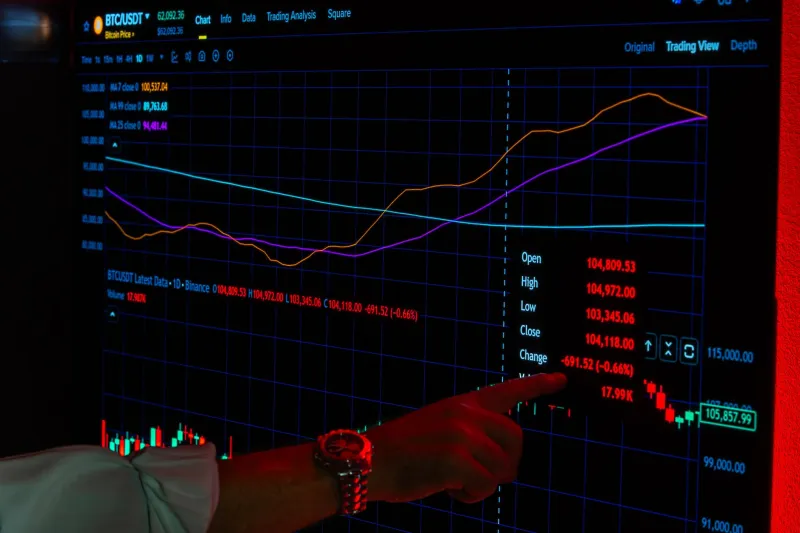
In cryptocurrency trading, this includes transaction fees that vary wildly depending on network congestion, bid-ask spreads that widen during high-volatility windows, and slippage — the difference between the price a player intends to execute at and the price the market actually delivers. On a single trade, these figures may appear negligible. Across hundreds of trades over a quarter, they represent a meaningful percentage of total capital.
In gaming environments, the same principle applies through a different set of variables: rake structures, withdrawal processing delays that lock capital during critical windows, and tiered reward systems that disproportionately favor higher-volume participants. Players operating below the VIP threshold are, in effect, subsidizing the infrastructure that elite members use at a fraction of the cost.
Opportunity Cost: The Most Overlooked Line Item
Beyond direct fees lies a more sophisticated form of drain that even experienced players frequently underestimate: opportunity cost. This is the return that capital could have generated if it hadn't been tied up, delayed, or deployed through inefficient channels.
Consider a player waiting 48 to 72 hours for a withdrawal to clear. During that window, the market moves. A position that would have been profitable becomes less so, or a reentry point disappears entirely. The player didn't lose money in the traditional sense — but they lost the productive use of their own capital. Over time, these windows accumulate into a pattern of missed compounding that is nearly impossible to recover from without structural change.
Elite players operating through institutional-grade platforms understand that speed and access are not luxury features. They are fundamental performance inputs. When capital moves faster, positions can be sized more precisely, and the gap between intent and execution narrows to a manageable margin.
How VIP Infrastructure Changes the Equation
The distinction between elite-level execution and standard-access trading is not merely cosmetic. It is architectural. Members operating at the VIP tier benefit from preferential fee structures that reduce friction at every touchpoint — lower transaction costs, priority processing, and access to liquidity pools that casual players simply cannot reach.
This matters because compounding is not just about returns — it is about the base on which those returns are calculated. A player who retains 5% more of their gross gains each quarter due to reduced overhead is not just 5% ahead. Over a 12-month horizon, the difference in compounded outcomes becomes exponential. The elite player is not necessarily smarter or more skilled in any given session. They are simply operating on a more efficient substrate.
TurboMoon VIP's platform architecture is built with this principle at its core. Every layer of the member experience — from capital deployment to reward redemption — is engineered to minimize the distance between performance and profit.
Recognizing the Tax Before It Accumulates
The first step toward eliminating the momentum tax is acknowledging that it exists. This requires a level of analytical honesty that many players resist because it complicates a narrative they prefer to keep simple. It is easier to attribute a disappointing quarter to bad luck than to audit the 40 basis points lost to slippage across 200 trades.
Elite players perform this audit routinely. They track not just their positions but their execution quality — the difference between where they intended to act and where they actually did. They monitor fee accumulation as a percentage of total capital deployed. They treat friction as a variable to be managed, not a background condition to be accepted.
This mindset shift — from performance-as-outcome to performance-as-process — is one of the clearest markers of a player who has moved beyond casual participation into genuine elite territory.
Building a Frictionless Operating Model
For players serious about eliminating the momentum tax, the path forward involves three interconnected disciplines.
First, platform selection. Not all execution environments are equal, and the difference in fee structures between a standard account and a VIP membership can represent thousands of dollars annually at meaningful volume levels. Choosing infrastructure that scales with ambition is not optional — it is foundational.
Second, capital velocity management. Elite players are deliberate about how long their capital sits idle, how quickly they can redeploy after a position closes, and what mechanisms are in place to ensure that processing delays don't become performance penalties.
Third, regular friction audits. On a monthly basis, elite players review their total cost of operation — fees paid, slippage absorbed, and opportunity windows missed — and use that data to recalibrate their approach. The goal is not perfection. The goal is continuous reduction of the gap between gross and net.
The Compounding Advantage of Low Friction
There is a reason that institutional investors obsess over basis points while retail participants focus almost exclusively on headline returns. At scale, and over time, the cost of doing business determines the ceiling of what is achievable. A player generating 25% annual returns who retains 23% of that after friction is in a fundamentally different position than one generating 22% and retaining 21.5%.
The numbers appear close in isolation. They diverge dramatically over five years. Over ten, they represent entirely different financial outcomes — different lifestyles, different levels of security, different capacities for risk-taking on the next opportunity.
That is the real cost of the momentum tax. Not the individual transaction. Not the single session. The compounded weight of operating below the level your ambition demands.
At TurboMoon VIP, the architecture exists to close that gap. The question is whether a player is ready to stop accepting friction as the price of participation — and start treating its elimination as the foundation of elite performance.